



UAE Founder Visa in 2026: Sponsor Options, Proof Checks, and Real Delays
A founder-focused, reality-based guide to UAE residency in 2026: which visa routes work, what documents stall approvals, and how visas connect to banking, rent, and family sponsorship.
Use your browser search or scroll to sections below.
Monday, 10:18 a.m., at an AMER typing counter in Al Barsha: you slide over your passport and entry stamp, and the clerk asks for your “establishment card or sponsor details”. You thought the company license was enough.
Ten minutes later you are on a call with your PRO, who says the immigration file is fine but the name on your degree certificate doesn’t match your passport because of a missing middle name. The application is not rejected, just paused, which can be worse because nothing moves until you fix it. In 2026, the friction for founder residency is rarely about one big rule change. It’s usually about route selection, document consistency, and whether you can support the downstream needs: bank KYC, a lease/Ejari, and (often) family sponsorship.
Pick the right founder residency route before you pay for anything
The three routes founders actually use (and what each one needs)
Founders typically end up in one of these buckets: employment visa via their own company, investor/partner visa linked to the company, or a long-term category such as a Golden Visa when they qualify. Marketing names vary by free zone and service provider, but the mechanics are broadly the same: who is the sponsor, what immigration file the company holds, and what proofs you can produce on request.
The practical difference is not just the visa label. It affects how quickly you can get an Emirates ID, how banks view your profile, and how easily you can sponsor dependents.
- Employment visa via your company: common for operating businesses with payroll structure; requires a company immigration file and role/title alignment
- Investor/partner visa: common for owner-managers; may require proof of shareholding/partner status and company documents
- Golden Visa (if eligible): longer validity but evidence-heavy; often slower to compile and more sensitive to document attestation
Trade-off comparison: speed vs flexibility (who each option fits)
If your priority is speed to Emirates ID so you can sign a lease and progress bank onboarding, the company-linked route that your free zone/mainland sponsor processes daily is often the least complex operationally, even if it is not the longest duration.
If your priority is reduced dependence on the company (for example, you might restructure or switch entities), a long-term category can be attractive, but it can also push your timeline out because the proof pack is larger and third-party attestations can take time.
- Fit for “need ID fast”: employment or investor/partner visa processed by your current sponsor’s standard workflow
- Fit for “longer horizon, more paperwork”: Golden Visa-style route when you can document eligibility cleanly
- If you are mid-fundraise or changing cap table: avoid routes that require repeated ownership updates to keep immigration records consistent
Decision criteria checklist (use this before choosing free zone vs mainland)
Route choice and company jurisdiction connect. Some founders choose a setup package first, then discover the visa quota, job title constraints, or immigration file lead time does not match their plan. A quick filter avoids paying twice.
- How many visas you need in the next 90 days (you, co-founder, assistant, dependents later)
- Whether you need a specific job title for banking or client onboarding (some banks ask for role clarity)
- Whether you can maintain a physical lease/Ejari soon (housing impacts proof of residence and some bank checks)
- Your document readiness: attested degree/marriage certificate, consistent names, clear passport validity
- Whether your home-country tax planning requires earlier proof of UAE presence (track days and keep boarding passes)
The visa-to-Emirates ID sequence (and where timelines slip)
A realistic sequence from entry to Emirates ID
Most founder residency paths still follow a familiar chain: entry status, application submission, medical fitness test, biometrics, and then Emirates ID issuance. The exact order can vary slightly by emirate and sponsor workflow, and delays often happen between steps because a document is “under review” rather than formally rejected.
Plan for a few weeks end-to-end in straightforward cases, and longer if you need attestations, have prior UAE records to clean up, or are adding dependents at the same time. What changes the timeline most is not the medical test itself, but the back-and-forth on documents and sponsor coordination.
- Do not book critical travel immediately after medical/biometrics; ID printing and delivery timing can move
- Keep soft copies and original hard copies accessible; some counters accept uploads, others still ask to see originals
- If you have an old UAE file (previous visa), assume someone will ask about cancellation and last exit date
Common failure points that pause applications
Most stalls look small but take days to resolve because they require re-typing, re-uploading, or re-attesting. Build time for fixes and avoid making big commitments (lease, school deposit, shipping) until your status is clearly progressing.
- Name mismatches across passport, degree, and previous visas (spacing, middle name, transliteration)
- Low-quality scans or cropped passport pages, especially entry stamp pages
- Sponsor file issues: company immigration file not active yet, incorrect establishment details, visa quota not available
- Old visa not properly cancelled or pending fines/overstay questions from a prior stay
- Dependents: missing attestation chain on marriage/birth certificates or unclear custody documentation
Mini-case: the ‘fast’ setup that turned into a month
A SaaS founder arrived expecting an Emirates ID in two weeks because the free zone package promised “quick processing”. The visa application was submitted, but the medical appointment was delayed because the passport had less than six months validity, triggering extra scrutiny and a request to renew before continuing.
They renewed the passport, but then the sponsor asked for an updated passport copy and re-typed the application, pushing biometrics out again. Nothing was denied, but the founder missed a planned bank onboarding window and had to operate using an overseas account longer than expected.
- Lesson: passport validity and document refresh cycles can force re-typing and reset internal queues
- Lesson: treat “processing time” as conditional on clean documents, not a promise
What to prepare before you arrive (so you don’t lose weeks)
Bring a document pack that survives real checks
Many founders arrive with PDFs on a laptop and discover they need originals, attestations, or higher-quality scans. Prepare for three audiences: immigration processing, bank compliance, and (if applicable) family sponsorship.
- Passport with comfortable validity buffer; keep copies of all used pages and entry/exit stamps
- Passport photos meeting UAE specs (carry extras)
- Degree certificate and/or professional certificates if your route or job title may require it
- CV and basic company profile (useful for bank KYC later, even if not asked for the visa)
- If bringing family: attested marriage certificate and birth certificates, plus certified translations if needed
- Proof of address in home country for bank/offboarding and compliance files (recent statement/utility bill)
Name consistency audit (do this once, properly)
A surprising amount of delay comes from inconsistent spelling. The UAE system is not always flexible about mismatches, and different counters interpret “same person” differently.
Before you travel, put your passport name at the top of a one-page checklist and compare it to every certificate and prior UAE document. If something differs, decide whether to correct the document, prepare an affidavit/letter, or accept that you may need extra steps.
- Check middle names, double surnames, and order of names
- Check prior UAE visa copies if you have them, especially if you used a different spelling years ago
- Make sure your marriage certificate matches passports if you will sponsor a spouse
How visas connect to rent, banking, and family sponsorship
Housing: why Emirates ID timing affects leasing and Ejari
In practice, many landlords and agents want to see an Emirates ID to move quickly on a lease, and Ejari registration becomes part of your “proof of UAE life” file. Some tenants manage with passport and visa page initially, but you should not assume the same flexibility across landlords.
If you need a lease early, ask the agent what they will accept for signing and Ejari, and factor in that DEWA setup and move-in logistics can overlap with visa appointments.
- Ask upfront: can the landlord sign with passport + visa entry status, or do they insist on Emirates ID
- Budget timing for deposits and cheques; delays can happen if your bank account is not ready yet
- Keep your tenancy contract and Ejari as they later support bank and tax residency evidence
Bank KYC: what founders get asked while the visa is still processing
Banks often start conversations before your Emirates ID is issued, but they typically complete onboarding only when core identity documents are in place. Expect detailed KYC questions about your business model, expected volumes, source of funds, and counterparties, especially for new companies.
This is where your visa route can matter indirectly. A clean, coherent story across your license activity, role/title, and residency status reduces back-and-forth.
- Prepare: license copy, shareholding documents, brief pitch deck or company profile, invoices/contracts if available
- Have a clear source-of-funds narrative with supporting statements (ranges, not vague descriptions)
- Expect follow-ups if your clients are in higher-risk jurisdictions or your activity is hard to categorize
Tax and family: day-counts, TRC planning, and dependent timing
If you are relocating for tax residency reasons, start tracking presence from day one and keep the boring evidence: boarding passes, tenancy documents, and local utility bills. Even if you do not apply for a tax residency certificate immediately, you want the file to exist early.
For dependents, timing is often the constraint. School admissions and medical insurance can create deadlines, but dependent visas can stall on attestation chains. If your spouse and children will arrive later, plan the attestation work before the school year pressure hits.
- Keep a day-count tracker and store travel evidence in one folder
- Align lease timing with your proof needs (tenancy and Ejari help)
- Start attestation steps early for marriage/birth certificates if family will join within 3–6 months
When something goes wrong: fixes that usually work (and what makes it worse)
If your application is paused, triage the cause in 30 minutes
Paused applications are normal, but they become expensive when nobody owns the next action. You want a single list of issues, a single owner, and a single folder of corrected documents.
- Ask for the exact reason in writing or as a screenshot from the portal status
- Confirm whether a re-typing is required or just a document upload
- Check if the issue is sponsor-side (quota, establishment card, immigration file) versus applicant-side (document mismatch)
What makes delays worse (avoid these patterns)
Founders often create delay by changing too many variables at once: new passport, new company name, new role title, new address, all while the file is mid-processing. Each change can trigger re-typing or additional verification.
When you must change something, change it once, then freeze the rest until Emirates ID is issued.
- Switching sponsor/jurisdiction mid-application without a clean cancellation plan
- Submitting multiple versions of the same document with different spellings
- Trying to sponsor dependents before your own status is stable
- Leaving the UAE during a sensitive window without checking how it affects next steps
Where to go deeper on related setup topics
If your route involves company formation choices, review how company setup decisions affect immigration files and banking readiness at https://svan.ae/en/company. If housing needs are driving your visa timeline, see the practical leasing and Ejari considerations at https://svan.ae/en/housing. If you are building a tax evidence file alongside residency, start with the relocation proof basics at https://svan.ae/en/tax. For family sequencing and the paperwork rhythm that hits during school deadlines, use https://svan.ae/en/family. For a broader overview of residency routes and processing touchpoints, keep https://svan.ae/en/visas as your hub.
Next steps
- Choose your visa route using the speed-vs-flexibility trade-off, then lock the sponsor/jurisdiction decision.
- Run a name-consistency and passport-validity audit and compile a single shareable document folder.
- Map your first 30 days around visa appointments, housing needs (Ejari), and bank KYC readiness.
FAQ
Can I start the visa process before my company bank account is open?
Yes. Visa processing is usually sponsor- and immigration-file driven, not dependent on a company bank account. The catch is practical: without a local account, paying deposits, rent cheques, and some service fees can be harder, and banks may still want your Emirates ID before finalizing onboarding.
What document issue causes the most rework for founders?
Name mismatches across documents. A missing middle name, different surname order, or inconsistent spelling between passport, degree, and previous UAE records can trigger re-typing or requests for additional proof. Do a name consistency audit before you arrive and keep one “final” spelling that matches the passport.
Can I rent an apartment without an Emirates ID?
Sometimes, but it depends on the landlord and agent. Some will proceed with passport and visa status, while others insist on Emirates ID for contracting and Ejari. If you need housing quickly, ask the acceptance criteria before you pay a holding deposit, and be prepared for your move-in date to shift if your ID timeline shifts.
When should I apply for dependent visas for my spouse and children?
Usually after your own residency is stable and you have the core documents ready (Emirates ID, tenancy/Ejari if required, salary or company documents depending on sponsor). If attestation is needed for marriage and birth certificates, start that work early because it is a common bottleneck, especially near school admission deadlines.
I had a UAE visa years ago. Does that matter now?
It can. Old UAE immigration records sometimes surface questions about prior cancellation, overstay fines, or mismatched name spellings. Bring copies of old visas/Emirates IDs if you have them and be ready to confirm last exit date and cancellation status.
How do I build tax residency proof while my visa is still in progress?
Start collecting evidence immediately: travel records, a day-count tracker, tenancy documents when you sign, and local bills when they become available. Even if you apply for formal tax residency documentation later, having an organized proof file early helps with bank KYC and home-country questions.
What should I do if my application status shows 'under review' for days?
Treat it as a triage task, not a waiting game. Ask your sponsor/PRO for the specific reason code or request note, confirm whether it needs a new upload or re-typing, and correct only what is requested. Uploading multiple versions of documents without clarity can slow things down because it creates inconsistency for the reviewer.
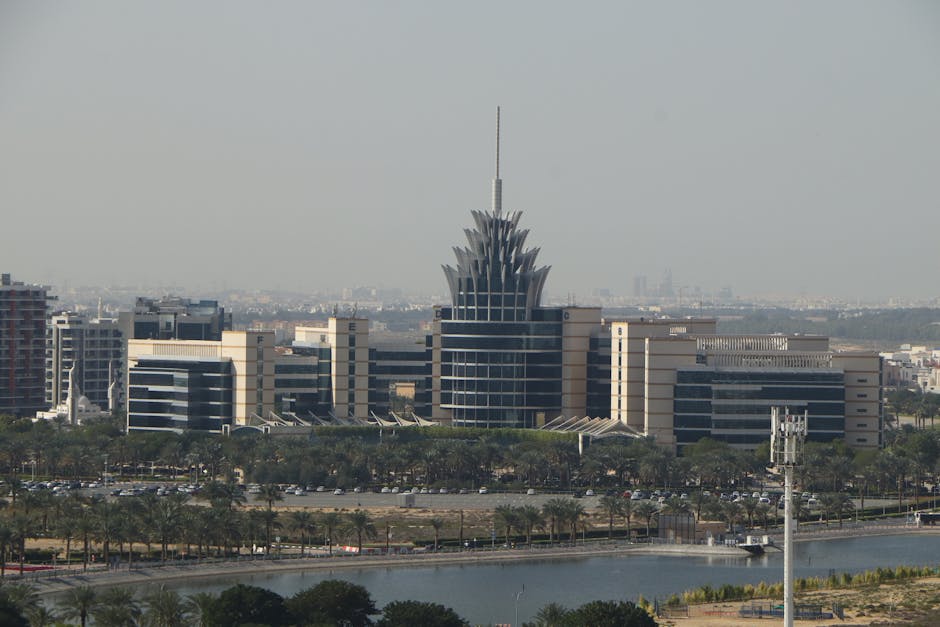
Photo credit: Pexels — Subbu Rayan
This article is general information, not legal or tax advice. UAE visa procedures, document requirements, and processing times can change and can differ by emirate, sponsor, and individual profile. Always confirm current requirements with the relevant authority or your licensed PRO before acting.